Placeholder draft. AI-generated on the topics Adam flagged for the first blog batch. Read, edit, or replace before publishing.
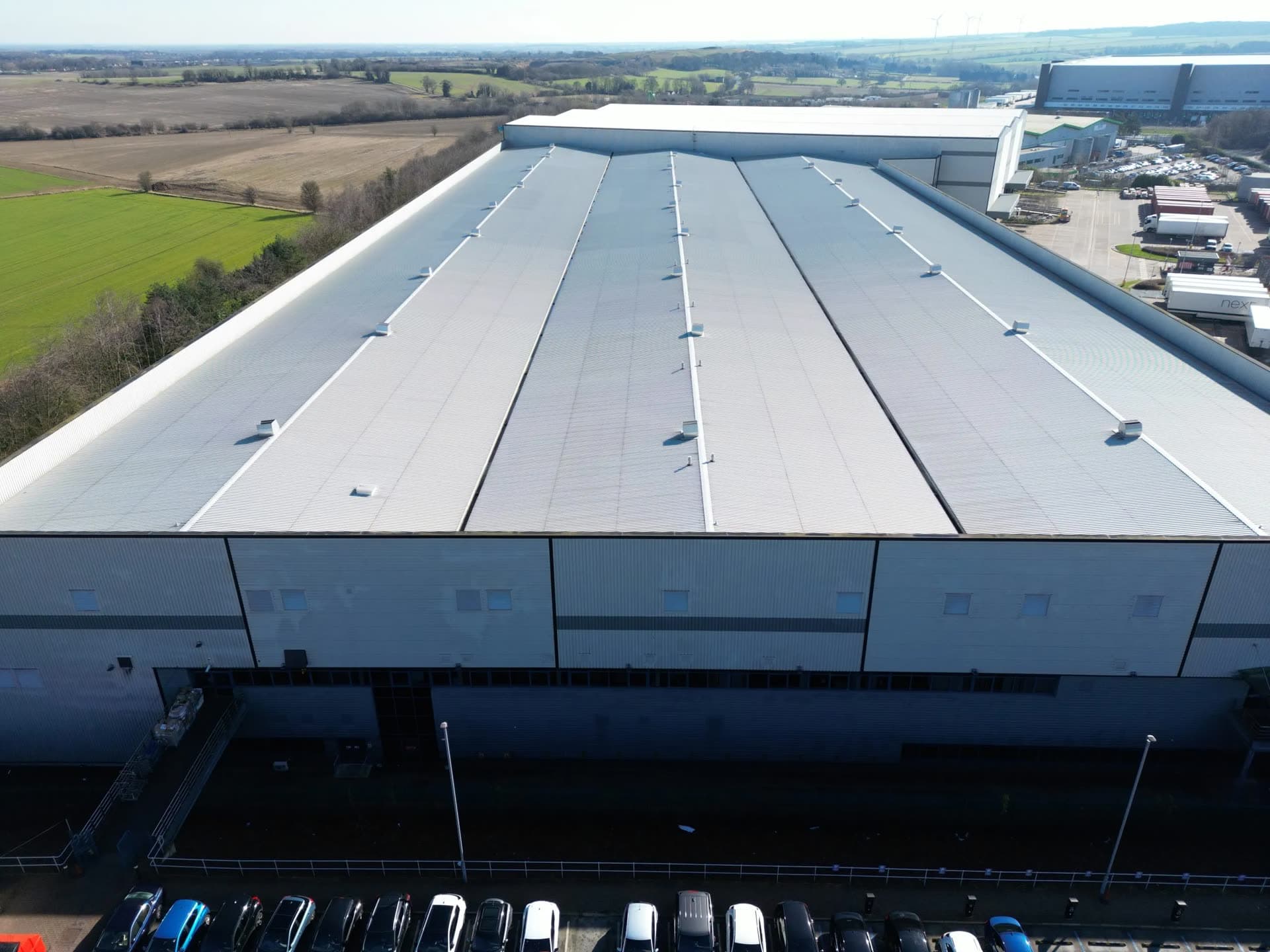
Industrial roofs take a beating. Profiled metal sheets, cut edges exposed to weather, large flat areas with multiple penetrations, and gutters that very rarely get cleaned. A drone survey gets you a comprehensive view of the whole roof in a morning. Below are the defects we see most often, and what they look like in our imagery.
Cut-edge corrosion
Cut-edge corrosion is the most common defect we capture on older profiled metal roofs. Wherever a sheet was cut on site, the protective coating is broken and the steel underneath starts to rust. From the air it shows up as orange-brown discolouration along the sheet edges, often running back from gutters and verges.
Caught early, cut-edge corrosion is a maintenance problem (a coating system, sometimes applied by drone-fed inspection then a roller-team on access). Left for years, it becomes a sheet replacement problem.
Defective roof lights
GRP and polycarbonate roof lights have a service life that is typically far shorter than the surrounding sheets. They yellow, craze, and become brittle. Once they crack, a roof light is a fall hazard and an immediate water-ingress point.
In aerial imagery, failing roof lights typically read as cloudy or discoloured patches with visible cracking. Pooling water around the perimeter is a related sign that the upstand or flashing has failed.
Blocked gutters
Industrial gutters fail quietly. Leaves, moss, dust, and the occasional bird strike collect over years. The water has nowhere to go, so it backs up under the sheet line and runs into the building. The repair cost downstream is far higher than a routine clean.
Drone imagery captures the run length of a gutter in a single pass, so a maintenance team can target the sections that need clearing rather than rigging access for the whole building.
Poor detailing at eaves and abutments
Eaves, verges, and abutments are where roof systems meet other elements (walls, parapets, plant). They are the most detail-heavy and the most commonly bodged. A flashing that was a temporary fix five years ago is often still there. Poor laps, missing seals, and improvised step flashings all show up clearly from a low oblique drone pass.
On almost every industrial roof we survey, the defects are not in the field of the sheet. They are at the edges, the laps, and the penetrations. That is where the time and the imagery go.
How we capture this
Each roof gets a top-down overhead pass at consistent altitude, plus targeted oblique imagery of any features that warrant a closer look. Imagery is issued within 48 hours of the flight, via secure file transfer, for your surveyor to interpret.